


Creative Designer Delivering Powerful Visual Solutions
I help businesses build strong brand identities through professional graphic design, packaging design, branding, motion graphics, and video editing. Every project is crafted with creativity, strategy, and attention to detail to deliver designs that leave a lasting impression.
vanindersingh
-
September 15, 2025
Why Packaging Design Matters for Your Product
 When customers walk into a store or browse products online, they are surrounded by countless choices. Before they read every product detail or compare specifications, they notice one thing first — how the product looks.
This is why packaging design plays such an important role in modern branding and marketing.
Packaging is not simply a protective covering for your product. It is a powerful communication tool that can influence how customers perceive your brand, understand your product, and decide whether to buy it.
A well-designed package can make your product look premium, communicate its benefits clearly, differentiate it from competitors, and create a memorable brand experience.
In this blog, we will explore why packaging design matters and how professional packaging design can help businesses build stronger brands.
 What Is Packaging Design?
Packaging design is the process of creating the visual appearance and structure of a product’s packaging.
It combines elements such as:
- Logo and brand identity
- Colors
- Typography
- Product photography
- Illustrations
- Graphics and patterns
- Product information
- Icons and symbols
- Legal and regulatory information
- Layout and visual hierarchy
A successful packaging design brings all these elements together in a way that is attractive, functional, and easy for customers to understand.
The objective is not simply to create beautiful packaging.
The objective is to create packaging that communicates, attracts, differentiates, and sells.
1. Packaging Creates the First Impression
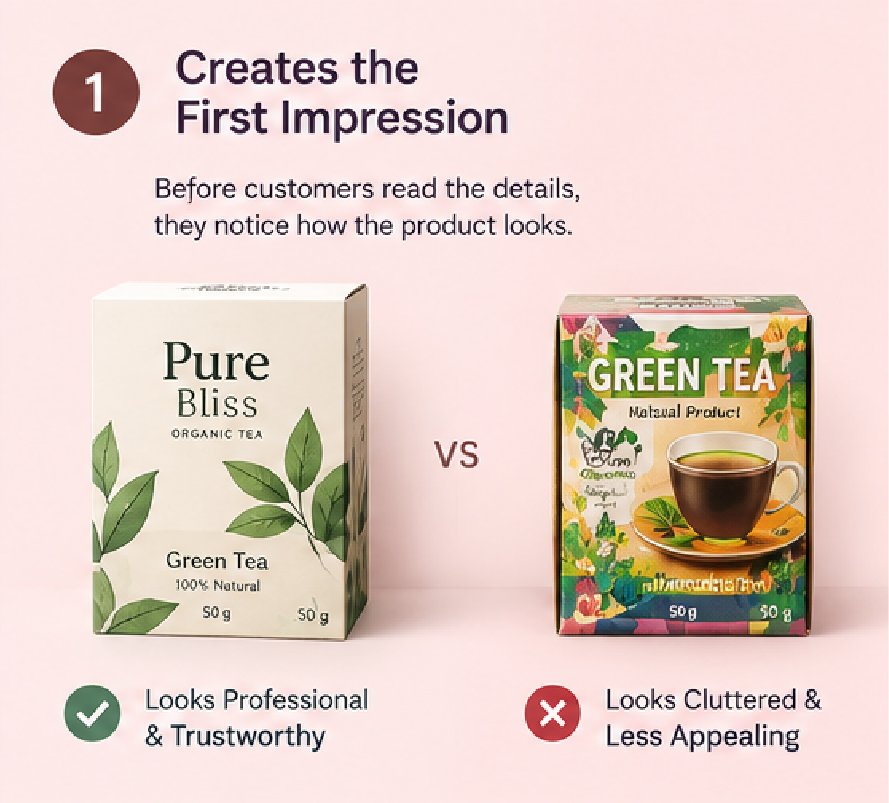
First impressions matter, especially when customers have many products to choose from.
Imagine two similar products placed next to each other. One has clean typography, strong branding, attractive graphics, and a well-organized layout. The other has inconsistent fonts, poor-quality images, and an overcrowded design.
Which one are you more likely to pick up?
Most customers naturally gravitate toward the product that looks more professional.
Your packaging communicates a message about your product before the customer even reads the details.
Professional packaging can make your product appear:
- More trustworthy
- More premium
- More reliable
- More modern
- More established
A strong first impression can encourage customers to take the next step and explore your product.
2. Packaging Helps Your Product Stand Out
The market is crowded.
Whether you are selling cosmetics, food products, FMCG products, wellness products, beverages, clothing, or lifestyle products, your competitors are fighting for the same customer’s attention.
This makes differentiation extremely important.
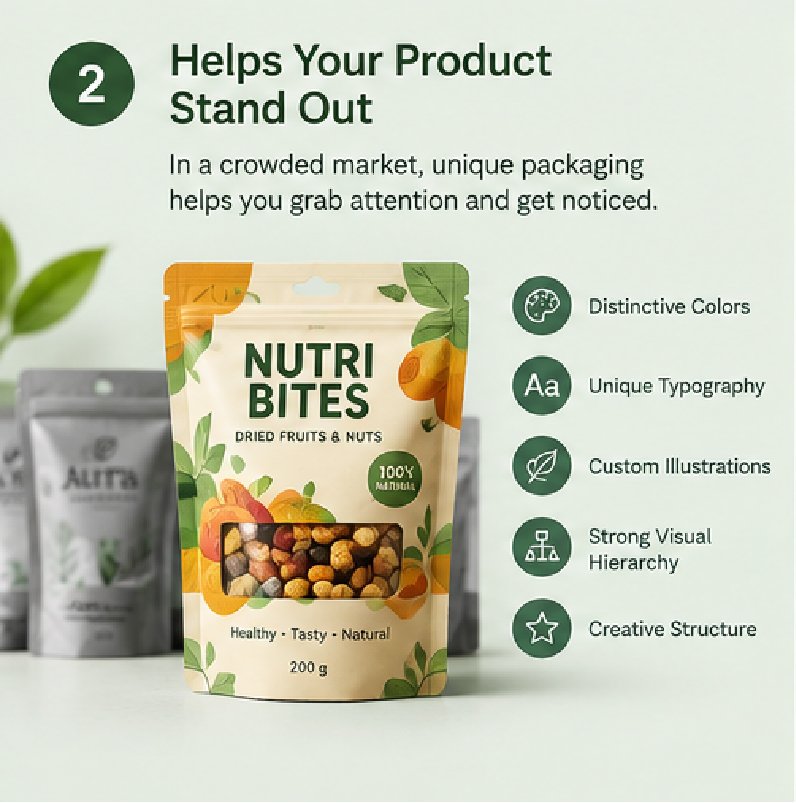
A well-planned packaging design can help your product stand out through:
- Distinctive colors
- Unique typography
- Custom illustrations
- Memorable graphics
- Strong visual hierarchy
- Creative structural concepts
- Consistent brand elements
However, standing out does not mean making the package unnecessarily complicated.
The best packaging is often the one that is different enough to be noticed but clear enough to be understood.
3. Packaging Communicates Your Brand Personality
Every brand has a personality.
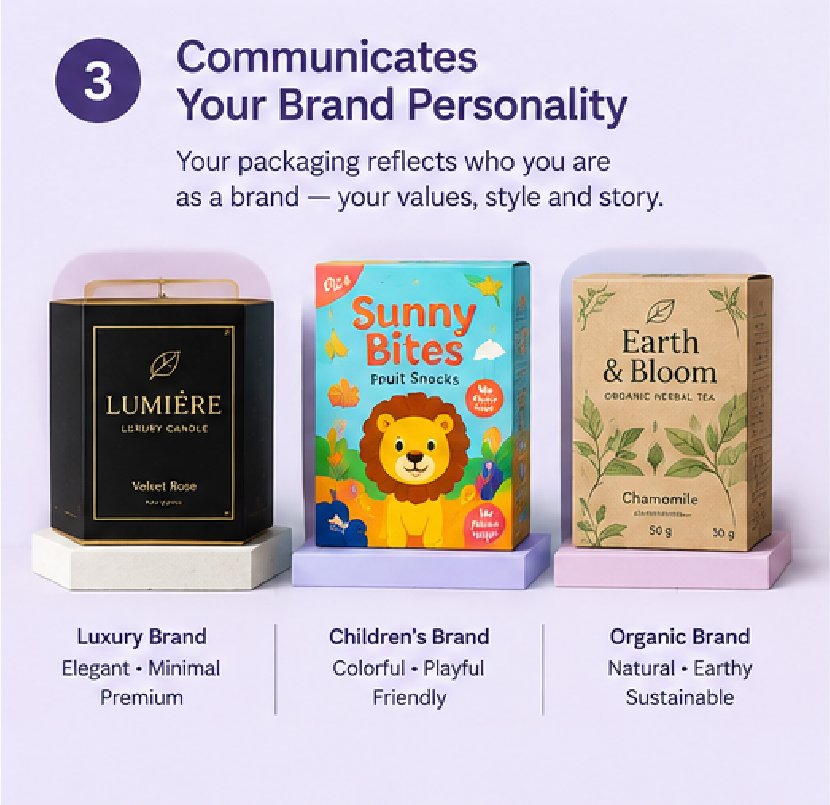
A luxury brand may want to look sophisticated and elegant.
A children’s brand may want to look colorful and playful.
An organic brand may want to communicate naturalness and sustainability.
A traditional Indian brand may use cultural elements, patterns, illustrations, or heritage-inspired typography.
Packaging gives you an opportunity to visually communicate this personality.
For example:
Luxury Brand
Minimal layouts, refined typography, subtle colors, premium finishes.
Children’s Brand
Bright colors, playful illustrations, friendly characters, expressive typography.
Organic Brand
Natural colors, botanical illustrations, earthy textures, clean layouts.
The design should reflect not only what the product is, but also who the brand is.
4. Good Packaging Builds Brand Recognition
Think about some of the world’s most recognizable brands.
You can often identify them simply through their colors, typography, packaging style, or visual elements.
This is the power of consistent branding.
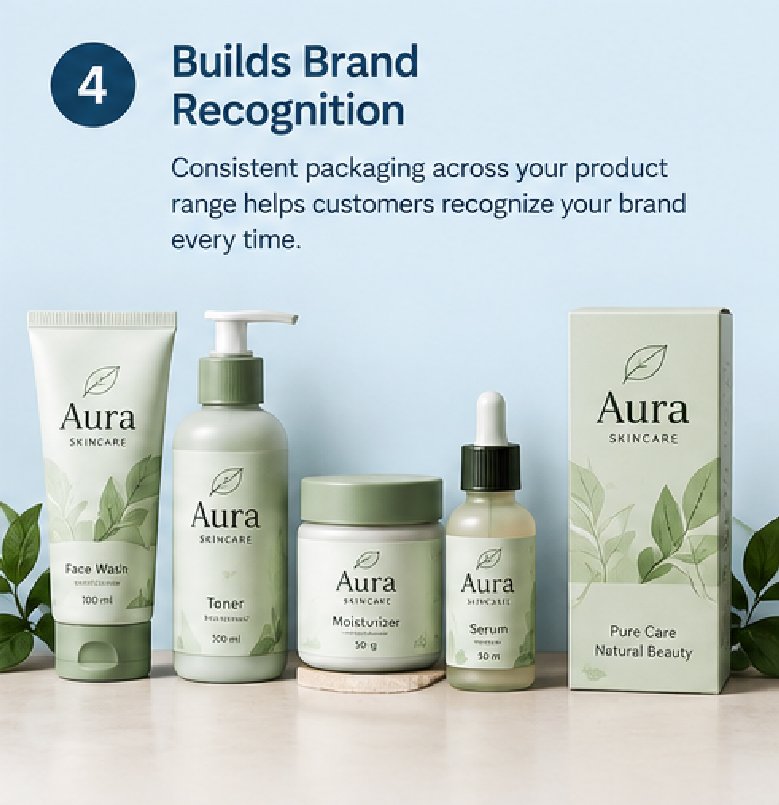
When your packaging follows a consistent visual language across different products, customers begin to recognize your brand more easily.
For example, a brand selling multiple skincare products may have:
- Different product names
- Different ingredients
- Different product benefits
But the overall packaging system can remain consistent through the same:
- Typography
- Logo placement
- Color system
- Layout structure
- Illustration style
- Graphic elements
This creates a strong product family.
Customers can quickly understand that different products belong to the same brand.
5. Packaging Can Communicate Product Benefits
Customers want to understand what they are buying.
Packaging provides limited space, which means information needs to be presented strategically.
Important information can include:
- Product name
- Main benefit
- Ingredients
- Quantity
- Usage instructions
- Key features
- Certifications
- Product claims
- Brand story
A professional packaging designer uses visual hierarchy to make important information easy to find.
For example:
Product Name → Main Benefit → Key Features → Supporting Information
This helps customers scan the package quickly.
Good packaging doesn’t overwhelm the customer with information.
It guides the customer toward the information that matters most.
 6. Packaging Influences Perceived Product Value
The visual presentation of a product can influence how customers perceive its value.
Consider two products with similar functionality.
One has premium packaging with carefully selected typography, high-quality graphics, and a sophisticated visual system.
The other looks generic and poorly organized.
Even before using the products, customers may perceive a difference in quality.
This is known as perceived value.
Packaging cannot replace product quality, but it can help communicate the level of quality and positioning you want your brand to represent.
This is especially important for:
- Luxury products
- Beauty and skincare
- Premium food products
- Gifts and hampers
- Wellness products
- Lifestyle products
7. Packaging Is a Marketing Tool
Your packaging is often one of your most visible marketing assets.
Unlike a digital advertisement that disappears from a customer’s screen, physical packaging can remain in a customer’s home, office, kitchen, bathroom, or workspace.
This creates additional opportunities for brand exposure.
A customer may:
- See your package repeatedly
- Share it on social media
- Recommend the product to someone
- Keep the package for reuse
- Display it in their home
This means good packaging can continue communicating your brand even after the purchase.
8. Great Packaging Creates a Better Unboxing Experience
In the e-commerce era, packaging has become part of the customer experience.
Customers increasingly share unboxing videos, product photos, and reviews online.
A thoughtfully designed package can make the experience more memorable.
Small details can make a difference:
- Attractive outer packaging
- Thank-you cards
- Branded inserts
- Custom stickers
- Tissue paper
- Premium labels
- Special opening experiences
When the customer feels that the brand has paid attention to the details, the product experience becomes more memorable.
This can also encourage customers to share their experience online.
9. Packaging Design Matters Even More for E-commerce
When a customer buys a product online, they cannot physically examine the packaging before purchasing.
Instead, they see product images.
This makes the visual presentation of packaging extremely important.
Your packaging needs to look good not only physically but also in:
- Amazon listings
- Flipkart listings
- Shopify stores
- Brand websites
- Instagram posts
- Digital advertisements
A strong packaging design can make your product photography and e-commerce creatives more attractive as well.
This creates a connection between packaging design and digital marketing.
10. Packaging Design Should Balance Creativity and Functionality
A common mistake is focusing only on aesthetics.
Packaging must also be functional.
A successful packaging project considers:
- Product protection
- Packaging dimensions
- Printing limitations
- Material
- Production process
- Readability
- Information hierarchy
- Shelf visibility
- Transportation
- Storage
For example, a beautiful design may not work if important information becomes unreadable after printing.
Similarly, a complicated design may increase production costs unnecessarily.
Professional packaging design balances creativity, usability, production requirements, and brand strategy.
Common Packaging Design Mistakes
Even good products can struggle if their packaging is poorly designed.
Here are some common mistakes businesses should avoid.
1. Too Much Information
Trying to put every possible detail on the front of the package can make it visually confusing.
Prioritize the most important information.
2. Poor Typography
Small or difficult-to-read text can make important information inaccessible.
Typography should be attractive but, more importantly, readable.
3. Inconsistent Branding
Different products should still feel like part of the same brand family.
4. Using Low-Quality Images
Poor-quality product photos or graphics can reduce the perceived quality of the entire package.
5. Ignoring the Target Audience
A packaging design should be created for the customer, not simply according to the personal preferences of the business owner.
6. Copying Competitors
Taking inspiration from competitors is normal, but directly copying their visual identity can make your brand forgettable.
Your packaging should have its own distinctive visual language.
How to Create Effective Packaging Design
A professional packaging design process generally starts with research and strategy.
Step 1: Understand the Brand
Identify the brand’s personality, positioning, values, and target audience.
Step 2: Research the Market
Study competitors and understand what visual styles are already being used.
Step 3: Define the Design Direction
Create a clear visual direction based on the brand strategy.
Step 4: Develop the Concept
Explore typography, colors, illustrations, photography, patterns, and layouts.
Step 5: Build the Packaging System
Create a design system that can work across different products and sizes.
Step 6: Prepare Production Artwork
Ensure the final files meet printing and production requirements.
Step 7: Review the Final Design
Check typography, colors, dimensions, information, alignment, and print specifications before production.
This process helps ensure that the final packaging is not only visually appealing but also practical and production-ready.
Why Businesses Should Invest in Professional Packaging Design
Your product may be excellent, but customers don’t always get the opportunity to experience the product before making a purchase.
Packaging becomes the bridge between your product and your customer.
Professional packaging design can help you:
- Create a stronger first impression
- Build brand recognition
- Differentiate from competitors
- Communicate product benefits
- Increase perceived value
- Improve shelf presence
- Strengthen your marketing
- Create a memorable customer experience
For growing brands, packaging should therefore be treated as an important part of the overall marketing strategy rather than simply an operational requirement.
Final Thoughts
Packaging is more than a box, bottle, pouch, label, or wrapper.
It is a visual representation of your brand.
A well-designed package can capture attention, communicate your product’s value, build trust, differentiate your brand, and create a memorable experience for customers.
Whether you’re launching a new FMCG product, building a skincare brand, selling food products, creating a premium gift box, or expanding an existing product line, investing in professional packaging design can make a significant difference.
Your product deserves packaging that communicates its value before the customer even opens it.
Need Professional Packaging Design?
At Vaninder Visuals, we create strategic and visually engaging packaging designs for brands looking to build a stronger market presence.
Our packaging design services include:
- Product Packaging Design
- Label Design
- Box Design
- FMCG Packaging
- Cosmetic Packaging
- Food Packaging
- Gift & Hamper Packaging
- Premium Packaging
- Packaging Mockups
- Print-Ready Artwork
Whether you need a single product label or a complete packaging system for multiple products, we can help turn your brand concept into professional visual packaging.
Ready to give your product packaging a professional makeover? Contact Vaninder Visuals and let’s create packaging that gets noticed.